

MAI UNA GIOIA
“Never a joy.”

Will you be one of the billions of people catching some soccer action over the next month or so?
The World Cup is the biggest sporting spectacle on Earth. Nearly a quarter of the world’s population will be watching the final match on July 19 in New Jersey.
According to a joint study by FIFA and the World Trade Organization (WTO), the tournament is projected to generate up to $40.9 billion in global GDP. FIFA expects to take in roughly $13 billion. As a non-profit, most of that money is supposed to flow back into football: staging tournaments, funding member federations, and running the global game.
And while the tournament has expanded from 32 to 48 teams, our beloved Italians could not secure a spot for the third consecutive World Cup. Since lifting the prestigious trophy in 2006, they have been downright disappointing on the international stage.
But today, I will not write about how a nation that breathes, eats, and lives for its national sport will once again be sitting on the sidelines while we cheer for newcomers such as Curaçao, Cape Verde, and Uzbekistan. Nor will I write about headlines you can read anywhere else, including in dozens of newsletters here on Substack.
Instead, I will tell you a little story I found myself involved in a few years ago.
Although it revolves around the beautiful game, it is really a story about a tiny country, an unfinished documentary, a few stubborn dreamers, and a lesson I never expected to learn.
THE SAN MARINO PHENOMENON
Several years ago, while reading about unusual stories, I came across a national football team that immediately caught my attention.
Not because they were champions.
Not because they had famous players.
Quite the opposite.
The San Marino national football team was considered one of the weakest teams in international football. In fact, they were ranked 211th out of 211 teams. Year after year, they faced giants such as Germany, England, France, Spain, and yes, Italy too. Teams valued at hundreds of millions of euros.
And every time, they lost.
Sometimes badly. 10-0. 13-1.
Most people would read that and move on to the next article.
I couldn’t.
What fascinated me was not the losing.
It was the fact that they kept showing up.
Why would a group of players willingly walk onto a field knowing they were likely going to suffer humiliating defeats?
The more I read, the more intrigued I became.
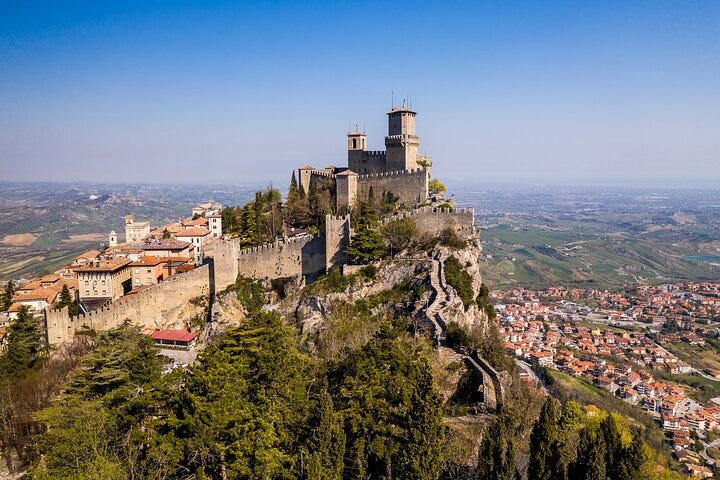
San Marino is one of the world’s smallest countries, a republic of barely 30,000 people, completely surrounded by Italy. Perched atop Mount Titano, it claims to be the oldest republic in the world, founded in the year 301.
Its medieval towers rise above the clouds. Narrow stone streets wind through the historic centre. From its walls, you can see all the way to the Adriatic Sea.
Walking through San Marino feels like stepping into a place that somehow escaped the rush of modern life.
The football team reflected the country itself.
Most of the players were not professionals.
They were accountants, pharmacists, mechanics, office workers, and small business owners.
A few evenings each week, they trained.
Then they put on their country’s jersey and stepped onto the field against some of the greatest footballers on earth.
There was something deeply admirable about that.
The story stayed with me long enough that I eventually mentioned it to two friends in Montreal who had connections in the film industry.
Immediately, they saw what I saw.
This wasn’t really a football story.
It was a story about perseverance.
About pride.
About ordinary people doing something extraordinary.
Before long, we were discussing the possibility of producing a documentary.
Then, somewhat surprisingly, the impossible started happening.
Funding opportunities began to emerge. There was interest. Meetings were encouraging. Conversations moved forward.
What had started as an article I happened to read was beginning to look like a real project.
In my mind, the documentary was already taking shape.
I could see the opening scenes.
The pharmacist facing England.
The accountant marking a world-famous striker.
The proud butcher side by side against players who earned more in one single game than he would earn in a lifetime.
Netflix?
Disney?
Why think small?
Then came the perfect occasion to investigate further.
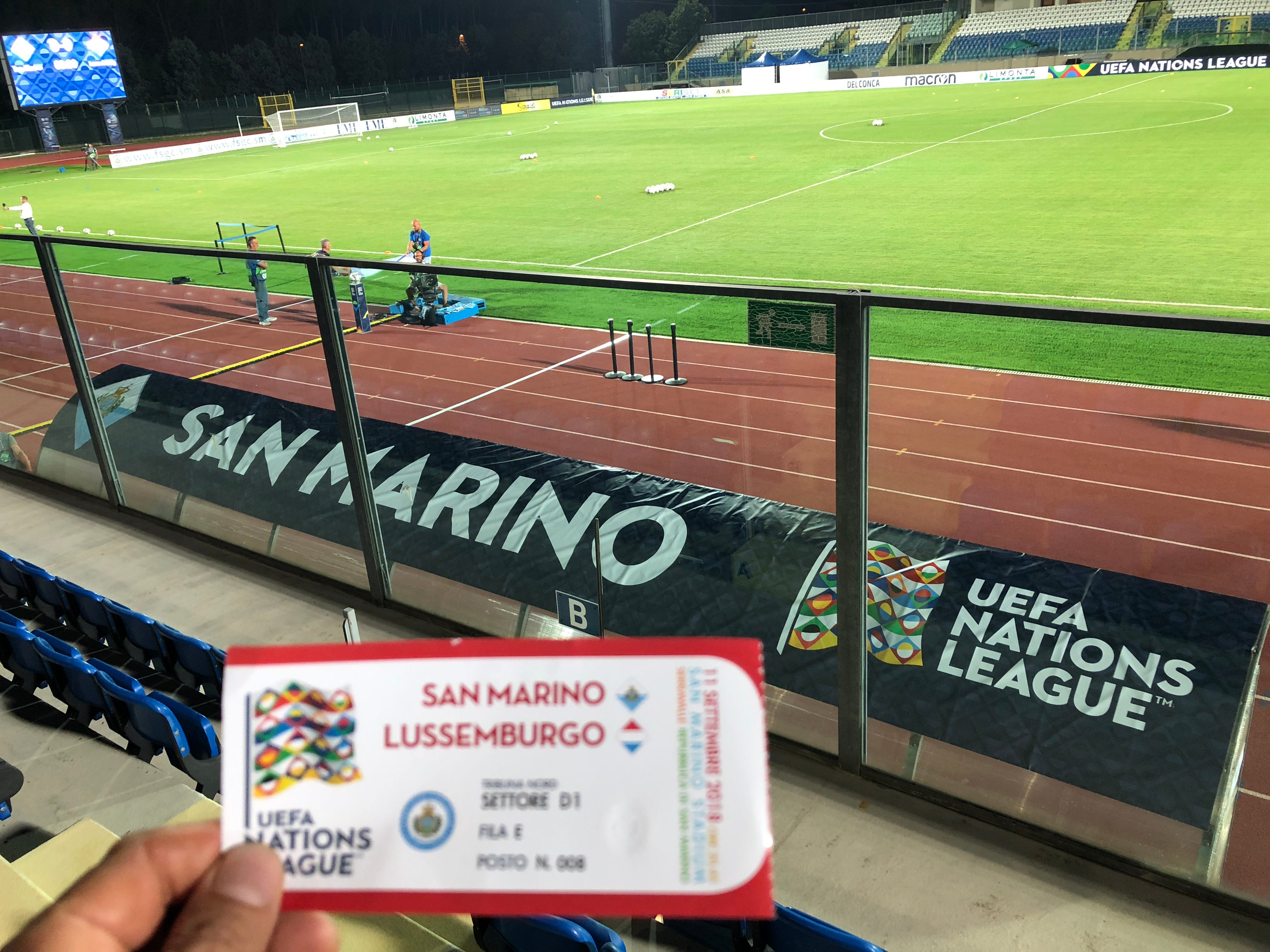
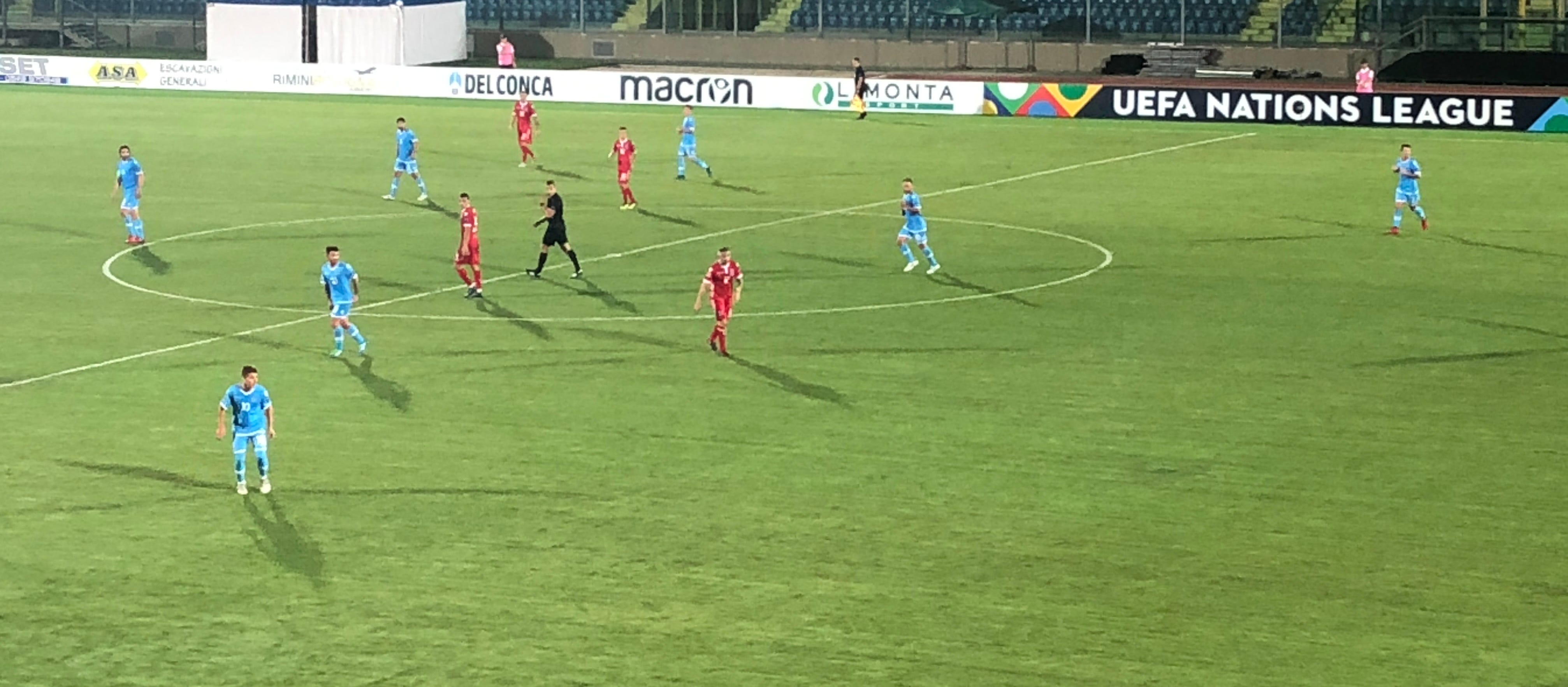
In the fall of 2018, while travelling to Italy, I discovered that San Marino would be playing a home match against Luxembourg.
I immediately booked four days in the tiny republic.
And this is where the story became almost too good to be true.
The Airbnb I booked happened to belong to the aunt of Mauro Valentini, the former captain of the national team.
Out of all the places I could have stayed, I somehow landed in the home of a woman who knew the football world of San Marino inside and out.
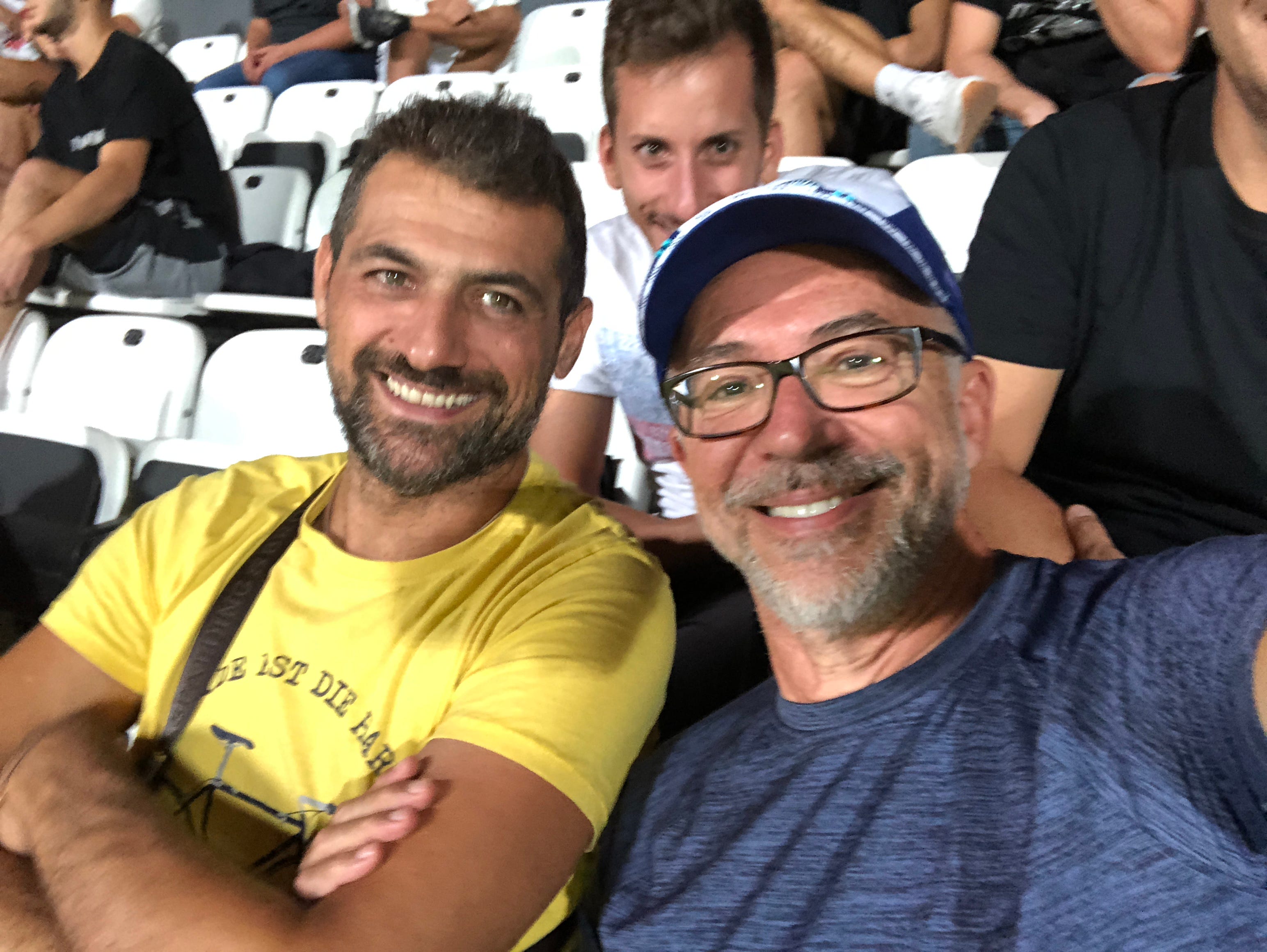
Before long, I was talking football with Mauro himself. We met at the Stadio Olimpico di Serravalle, a modest stadium holding just about 5,000 spectators.
Mauro had played professionally in Italy’s lower divisions and later for the San Marino national team, all while maintaining his day job as a bank director. He proudly told me he had scored one of the team’s very few international goals, a rare feat in San Marino’s football history.
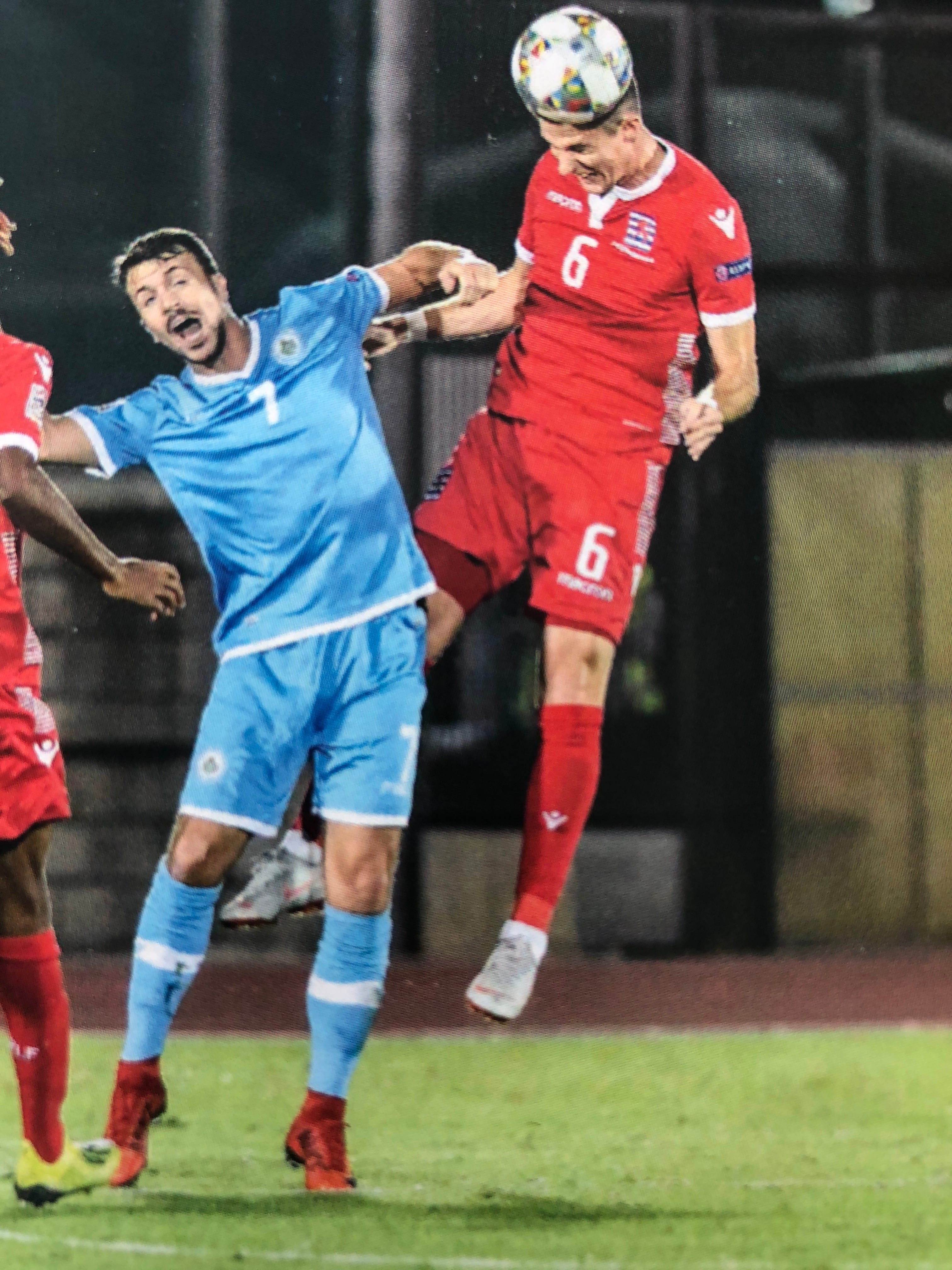
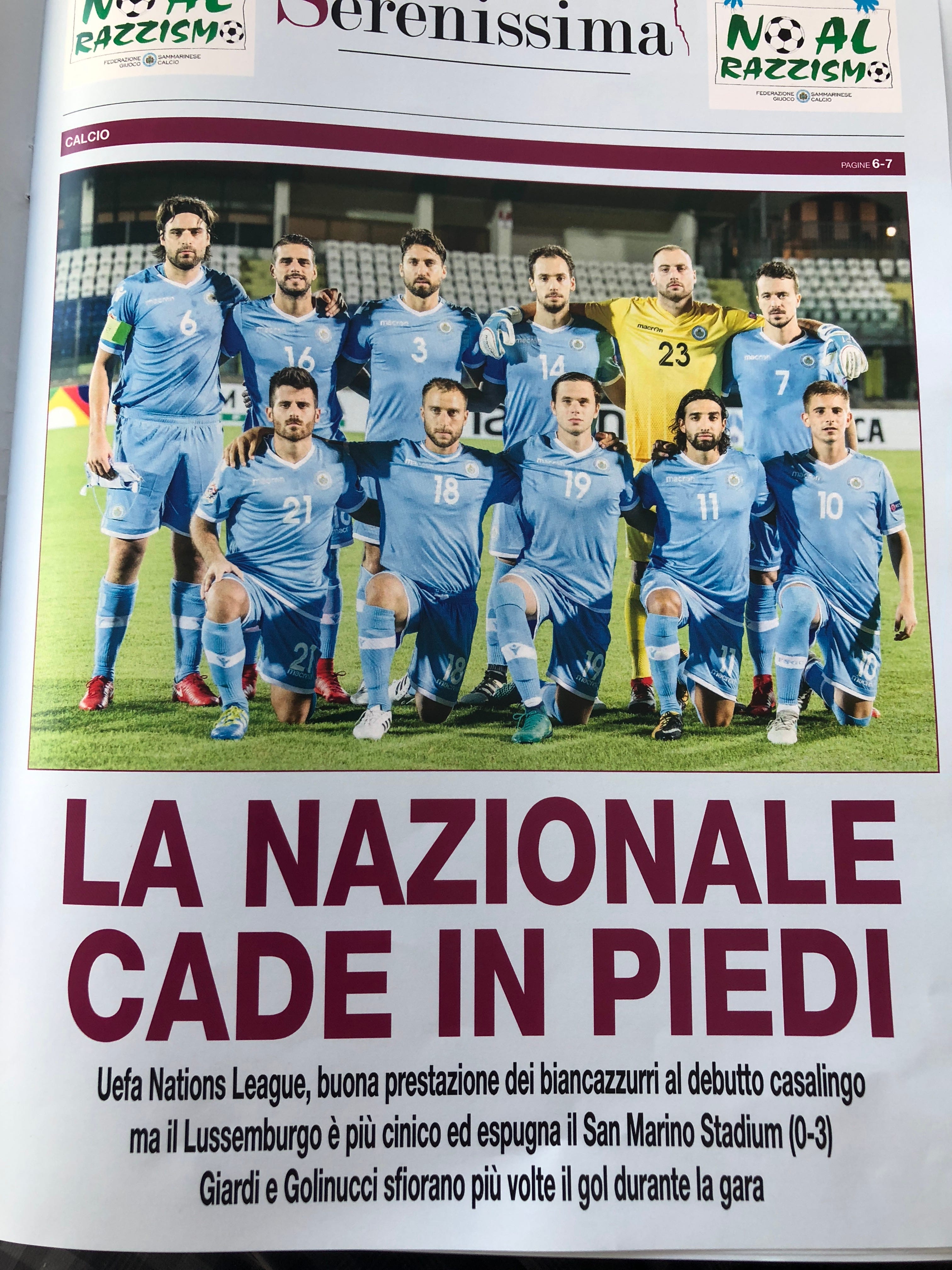
At that point, I was convinced the documentary was destined to happen.
The stars seemed perfectly aligned.
I spent my days wandering the streets of San Marino, talking with locals, gathering information, imagining scenes for the film, and slowly falling in love with the country.
What struck me most was not the football.
It was the people.
They carried themselves without urgency.
Life moved at a gentler pace.
Coffee conversations seemed more important than schedules.
Relationships mattered more than efficiency.
As a North American accustomed to deadlines, follow-ups, and quick answers, I found it both charming and, at times, slightly frustrating.
Back in Canada, we continued our efforts.
Meetings were positive.
Phone calls were encouraging.
Funding appeared available.
Everyone seemed to like the idea.

Yet somehow, nothing moved forward within San Marino itself.
The more we pushed, the more elusive everything became.
Letters went unanswered.
Promises led nowhere.
Conversations remained conversations.
Even Mauro’s aunt warned me that I was dreaming in technicolor. What did she know that I did not?
Months passed.
There was a silence that became increasingly difficult to understand.
Was there a financial reason?
Did they simply prefer to keep their story to themselves?
Were we outsiders asking questions nobody wanted answered?
To this day, I honestly do not know.
Eventually, to end the uncertainty, we asked the president of the football federation for a definitive answer so we could move on one way or the other.
The response finally arrived.
The board had rejected the project.
No real explanation was provided.
Just a polite refusal.
The mystery remained.
The disappointment was real.
Not because of the work involved.
But because I genuinely believed the story deserved to be told.
What puzzled me most was that the world saw San Marino as the worst team in international football.
I saw them as one of the most inspiring.
A country of just 30,000 people continuing to show up year after year despite impossible odds.
Surely, that was worth celebrating.
Maybe winning was never the point.
Maybe they were perfectly content being exactly who they were.
A group of friends representing their country.
Playing football against giants.
Sharing stories afterward over coffee or a glass of wine.
Meeting football legends.
Then returning to work the next morning.
Perhaps they understood something many of us spend a lifetime chasing.
That fulfillment does not always come from reaching the destination.
Sometimes it comes from simply being part of the journey.
Without that failed documentary, I would never have discovered one of Europe’s most fascinating little countries.
I would never have walked its medieval streets, met its people, attended a national match, or collected memories that remain with me today.
The documentary failed.
The experience did not.
I learned something from San Marino.
Showing up matters.
Trying matters.
Belonging matters.
The players know the odds are stacked against them every time they step onto the field.
Yet they keep playing.
And perhaps that is why so many people quietly cheer for them.
Their famous local expression is, Mai una gioia.
“Never a joy.”
But I believe that only applies on the field.
Outside those white lines, it feels more like Sempre una gioia.
“Always a joy.”
Happy World Cup month ⚽️
Since Italy will once again be watching the tournament from the couch, I can wholeheartedly throw my support behind my other beloved country: Canada.
As I write these lines, Canada remains undefeated in its group.
Who would have thought?
For once, I won’t be shouting Forza Azzurri.
Forza Canada 🇨🇦
Très intéressant comme texte. C’est inspirant de voir ces joueurs, qui ne sont pas des professionnels, representer avec passion leur pays .
Interesting story! I wonder why they wouldn’t want to tell their story. I think they are content as it is? Who knows?
But now I am interested to know more about San Marino and its people!